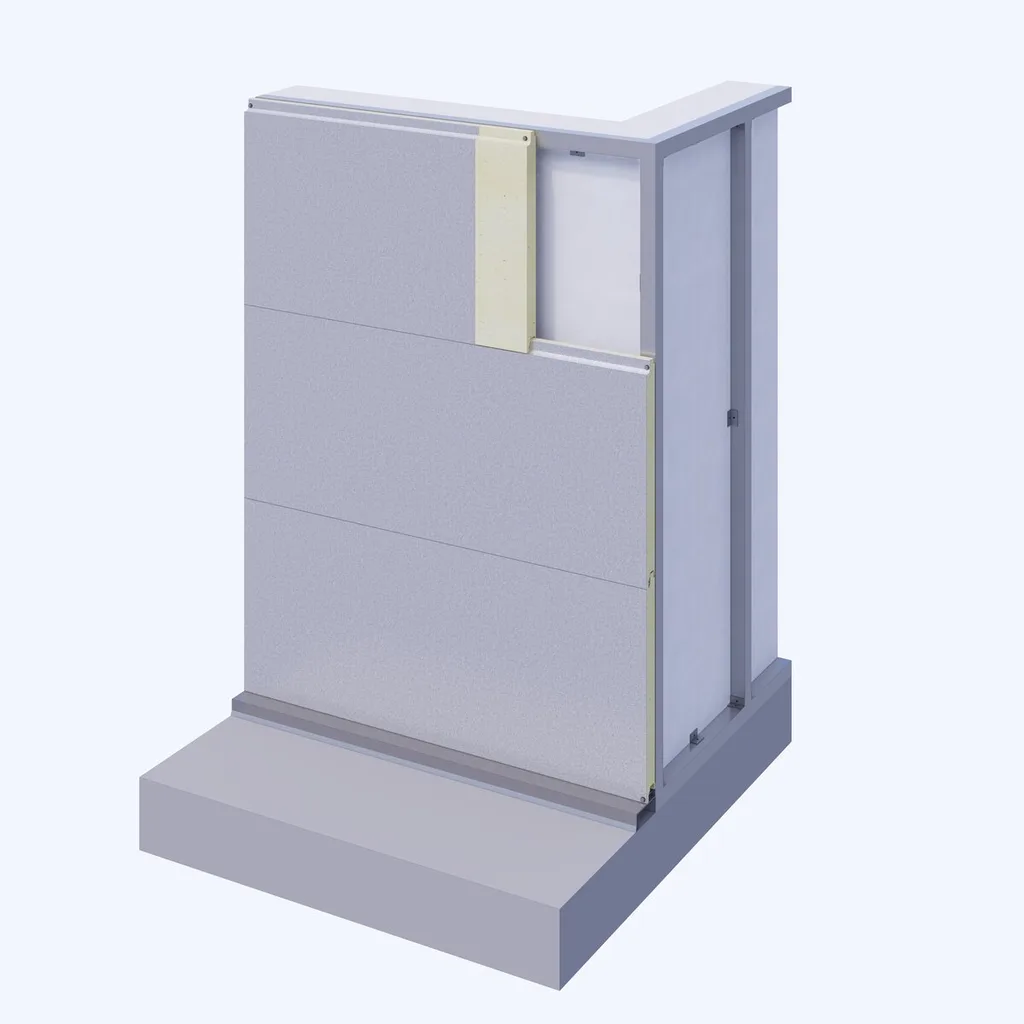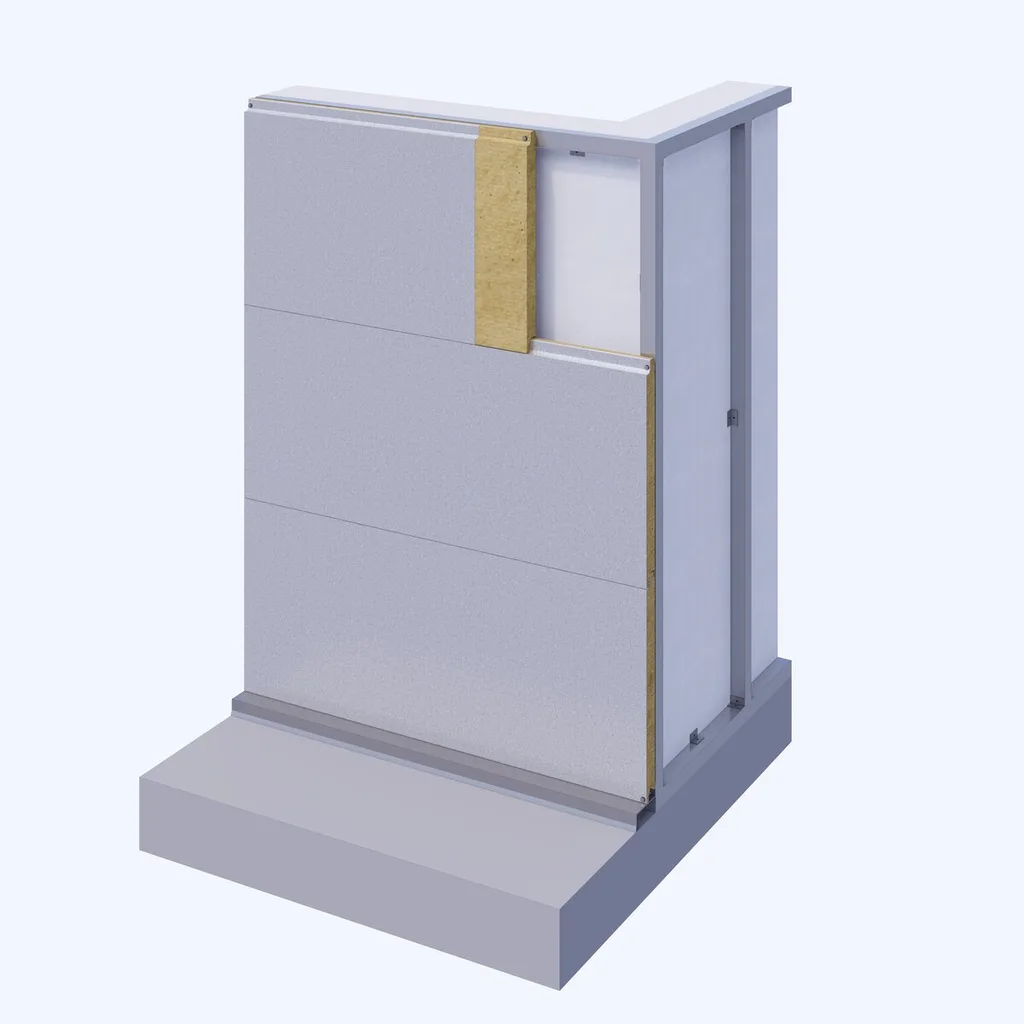
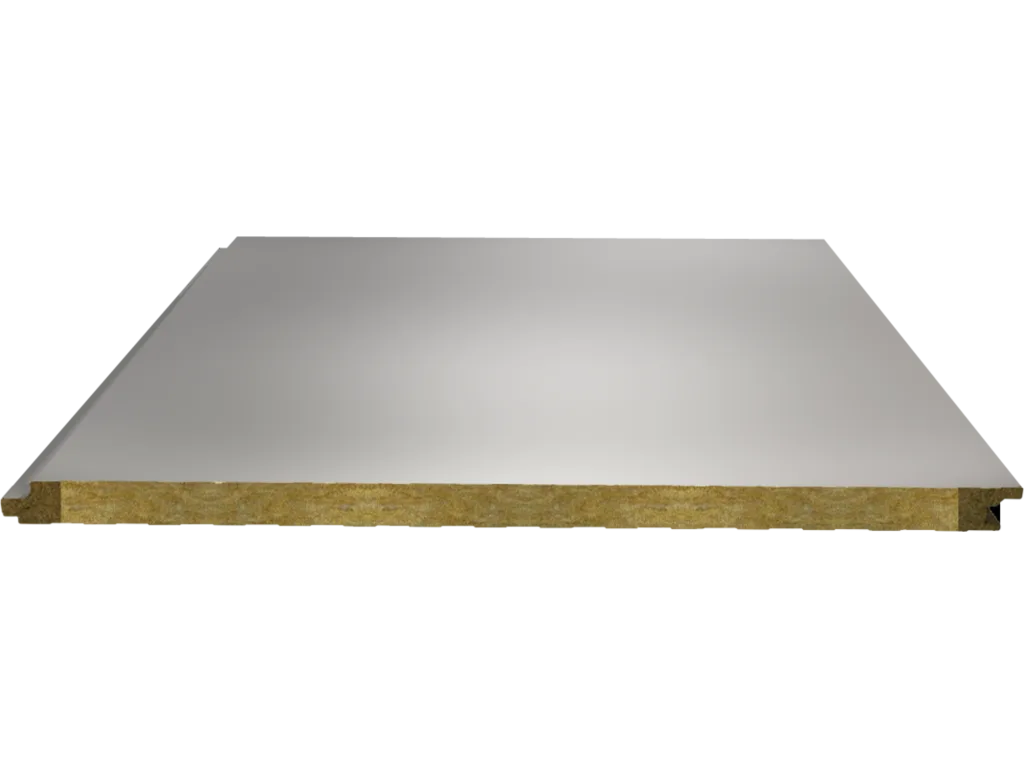
What is siding cladding?
Siding is the panel group hung in front of the load-bearing structure to form the visible face of the building. What sets it apart from the sandwich panel is primarily appearance: it also carries load and provides insulation, but the choice is driven by how the surface looks.
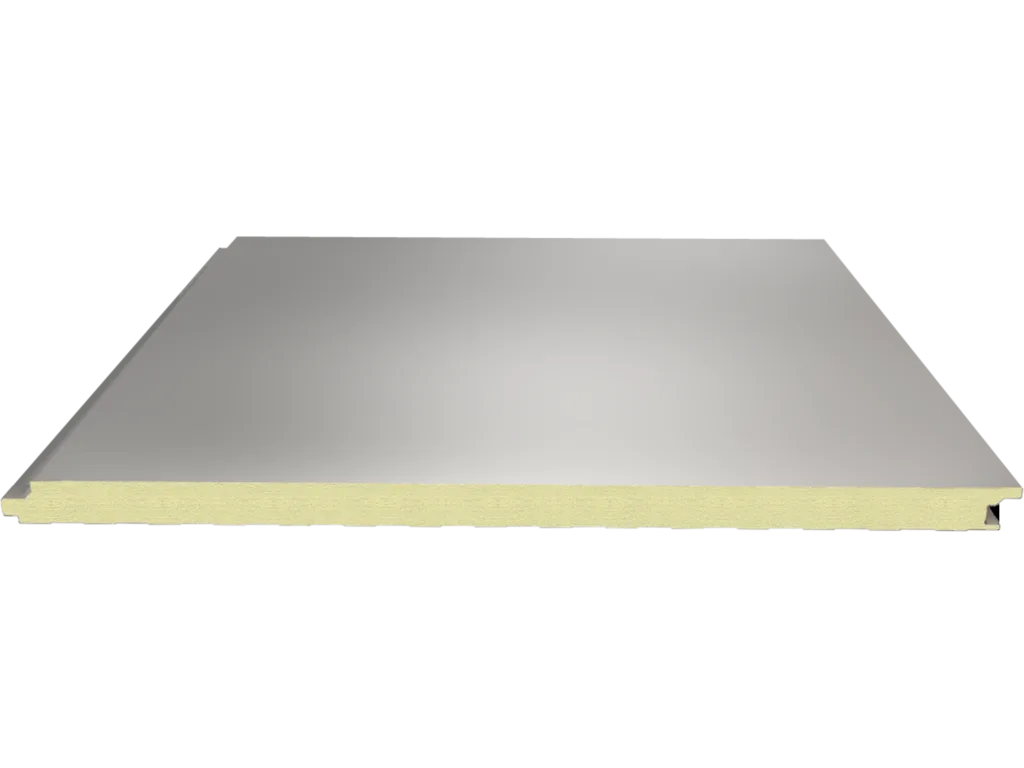
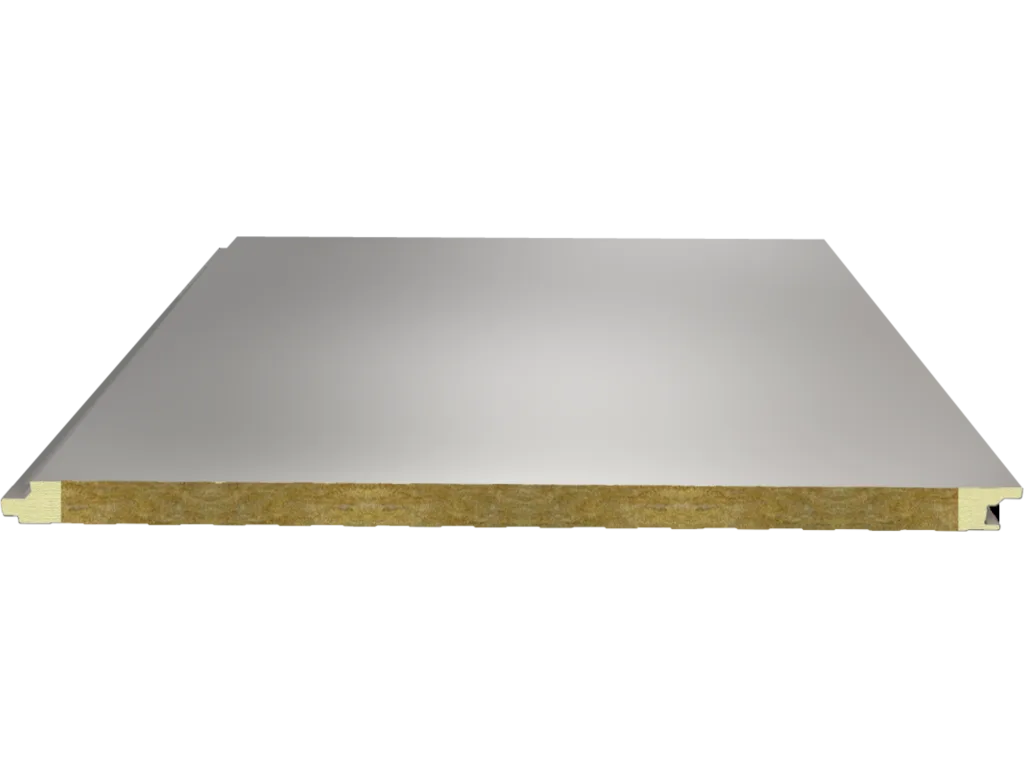
The products fall into two groups by cover width. Both have flat, ribless faces and come with three cores: polyurethane, hybrid and rock wool.
Products
| Product | Cover width | Core |
|---|---|---|
| SIDING 500 | 500 mm | PUR-PIR, hybrid, rock wool |
| SIDING 1000 | 1000 mm | PUR-PIR, hybrid, rock wool |
SIDING 500 is the narrow-width cladding profile. The five hundred millimetre width creates a linear texture on the façade; as the number of panels increases, that line defines the character of the façade.
SIDING 1000 gives the same flat face at a width of one thousand millimetres. Because fewer panels are used, the lines on the façade are further apart and the surface reads as more continuous.
The facing is selected as steel sheet or aluminium.
Insulation side
In both products the core provides the insulation. With a polyurethane and polyisocyanurate core, thermal conductivity is given as 0.022 W/mK and fire class class as B-s1-d0. With a hybrid and rock wool core, thermal conductivity rises to 0.045 W/mK and the fire class drops to A2-s1-d0.
The choice of core depends on the fire regulations applying to the building and on the required insulation thickness. In tall buildings and on façades facing escape routes, an A2 class core is required.