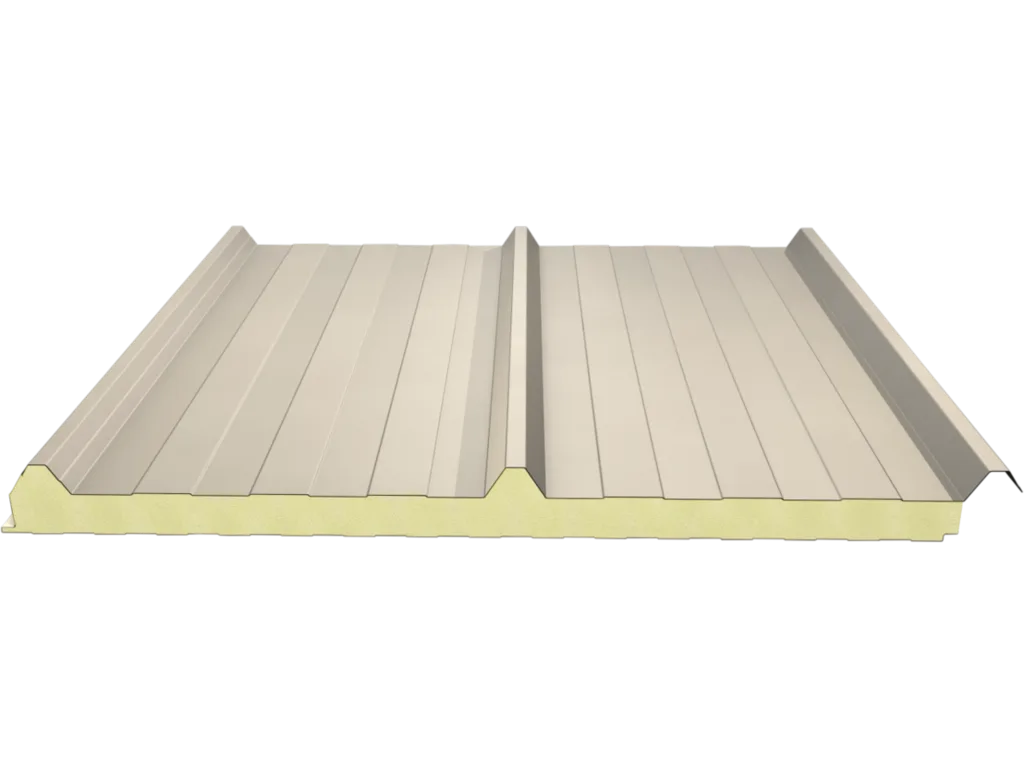
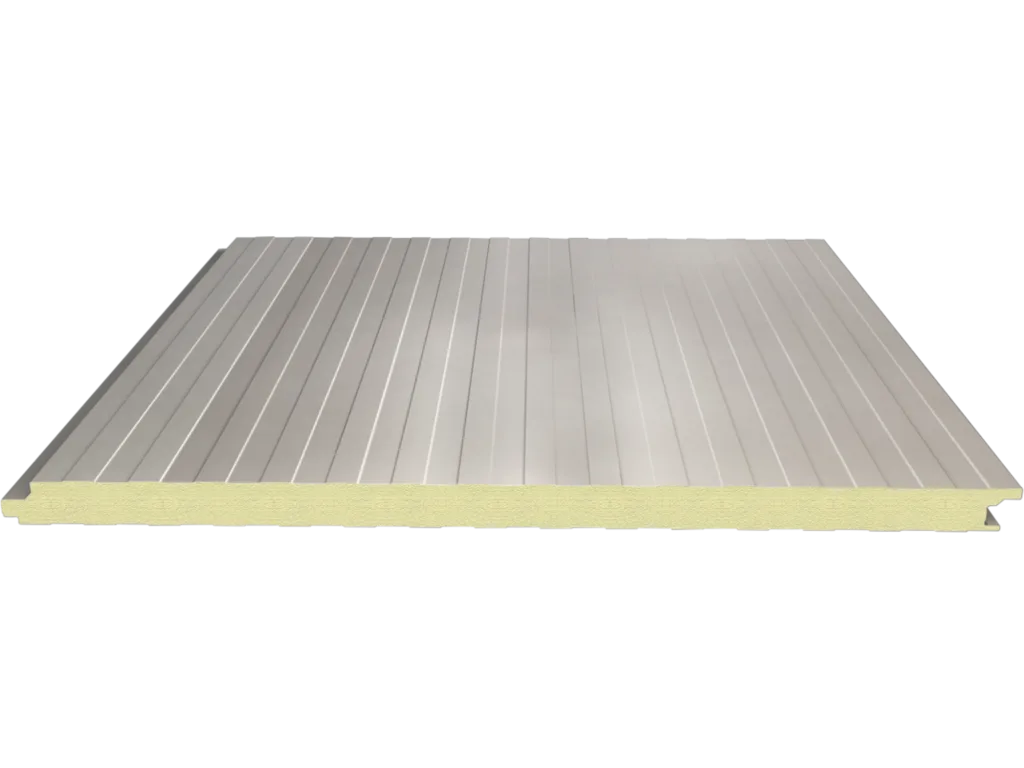
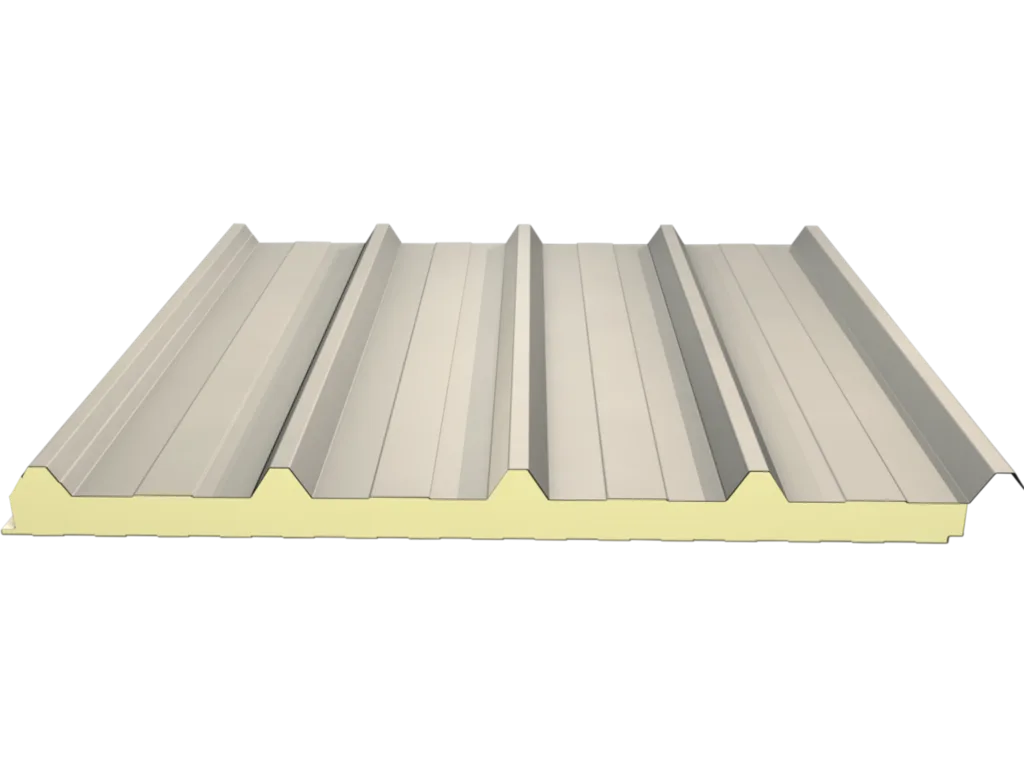
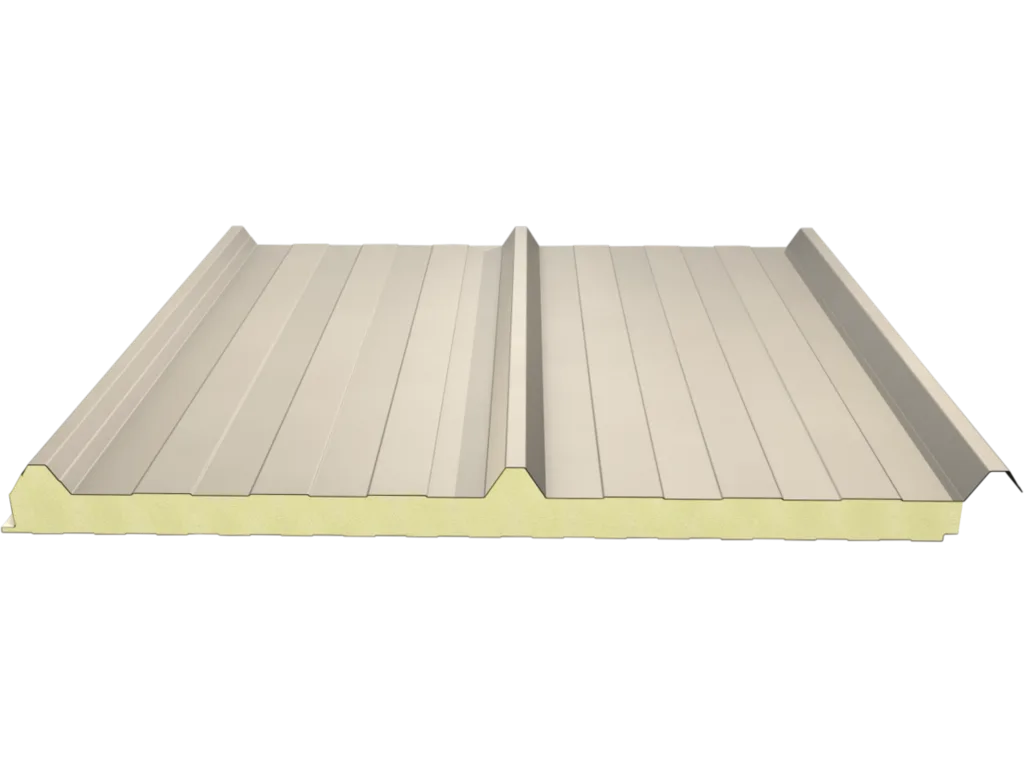
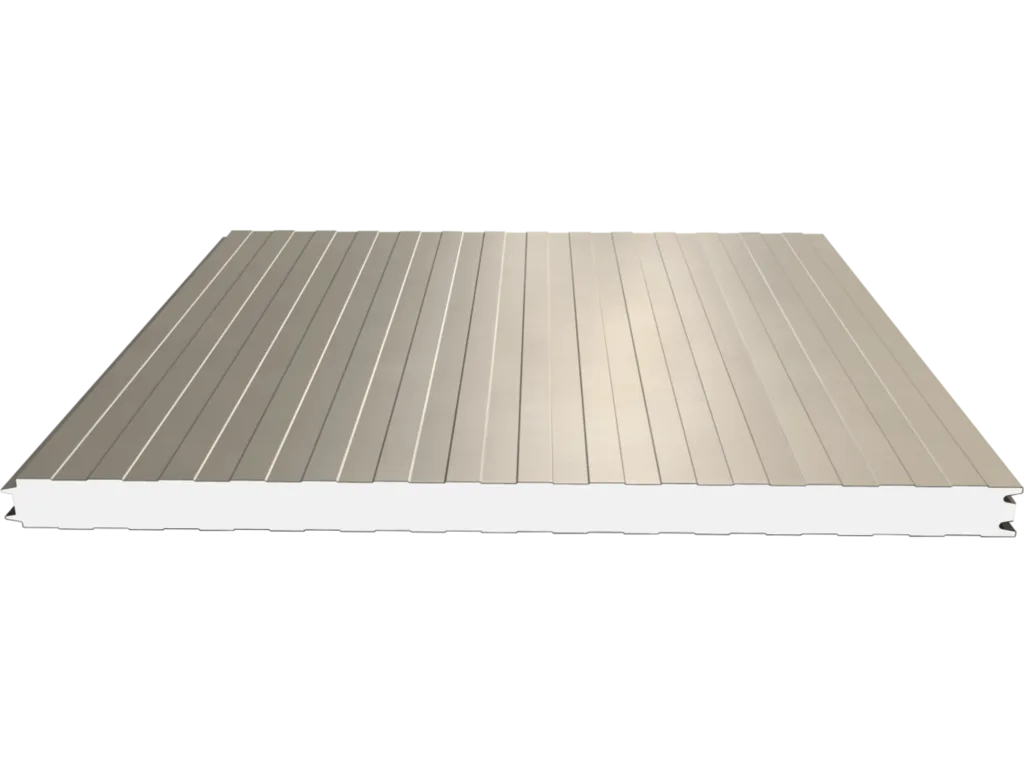
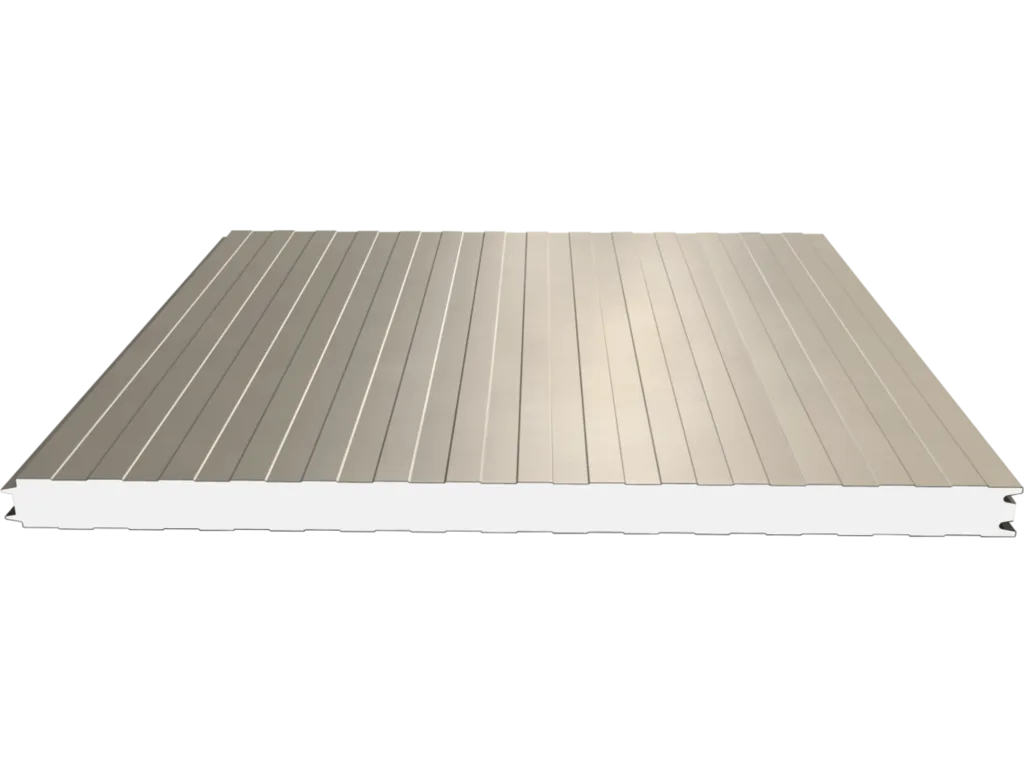
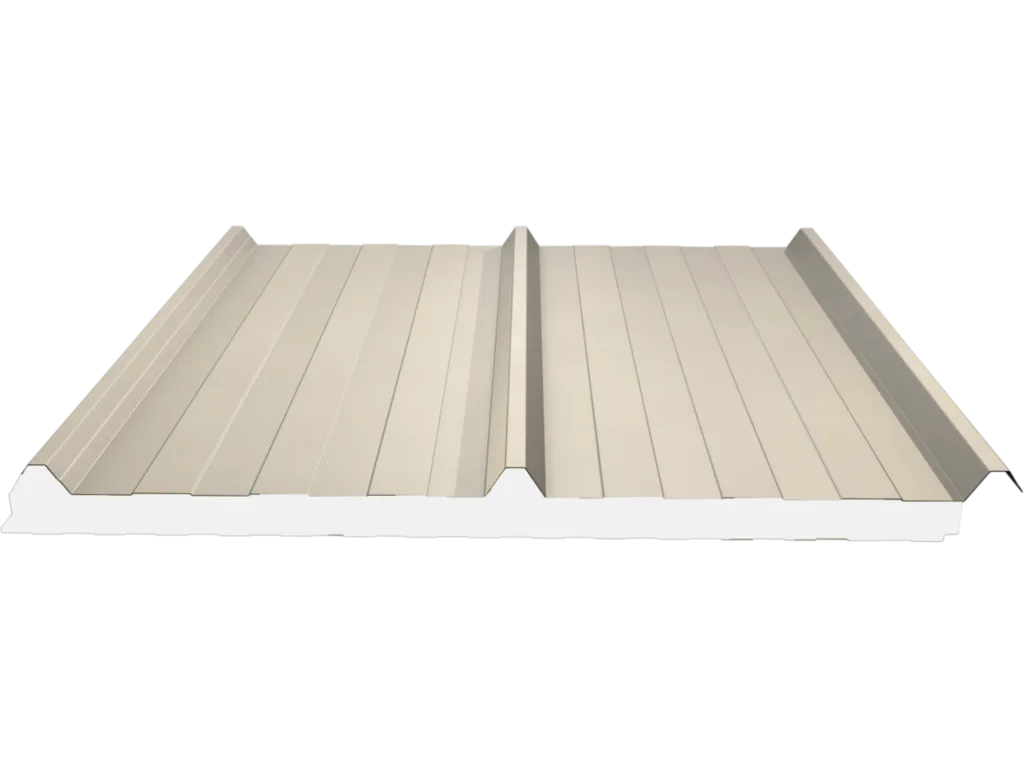
What is the EXO series?
EXO stands out as the economical panel family. It is produced on the same line and with the same production discipline as the standard roof and wall panels; the main difference lies in the section and length range. It focuses on thin thicknesses, gives a lighter structure and is installed faster.
The EXO series does not mean a panel of lower quality. The same steel sheet, the same core chemistry and the same surface treatment are used as in the standard products. The difference concerns the purpose the panel is dimensioned for. The EXO series is chosen for buildings where the insulation expectation stays at a moderate level, the span is kept short, and cost and installation speed are decisive.
Three families: EKO, PLUS and EPS
EXO EKO (NRP3-Eko, NRP5-EXO, NWP0-Eko): The basic series with a polyurethane core. Thermal conductivity is 0.022 W/mK and the fire class is B-s2-d0.
EXO PLUS (NRP3-ExoPlus, NRP5-ExoPlus, NWP0-ExoPlus): Produced in the same thickness range, with upgraded steel sheet and surface properties. The appearance and durability expectation is one step above the EKO series.
EXO EPS (NRP3EE-EPS, NRP5EE-EPS, NWP0-EPS): The series with an expanded polystyrene core. Thermal conductivity is 0.038 W/mK. It stands out as the most economical option; it is used in buildings where the insulation expectation is limited and in temporary or lightly loaded structures.
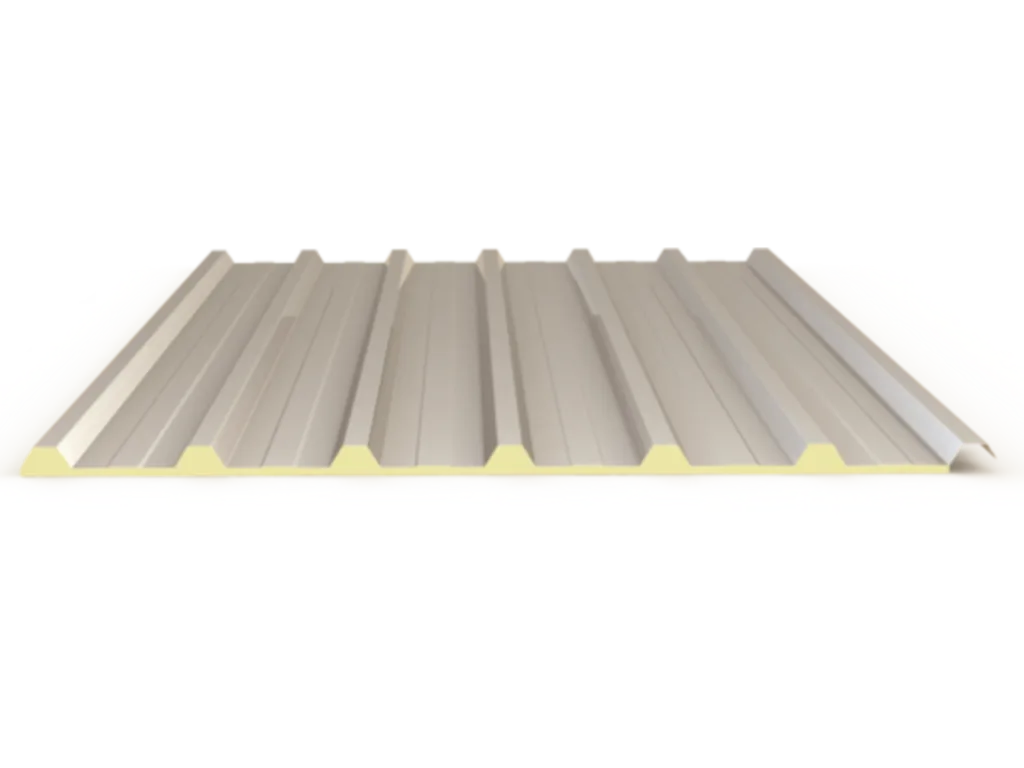
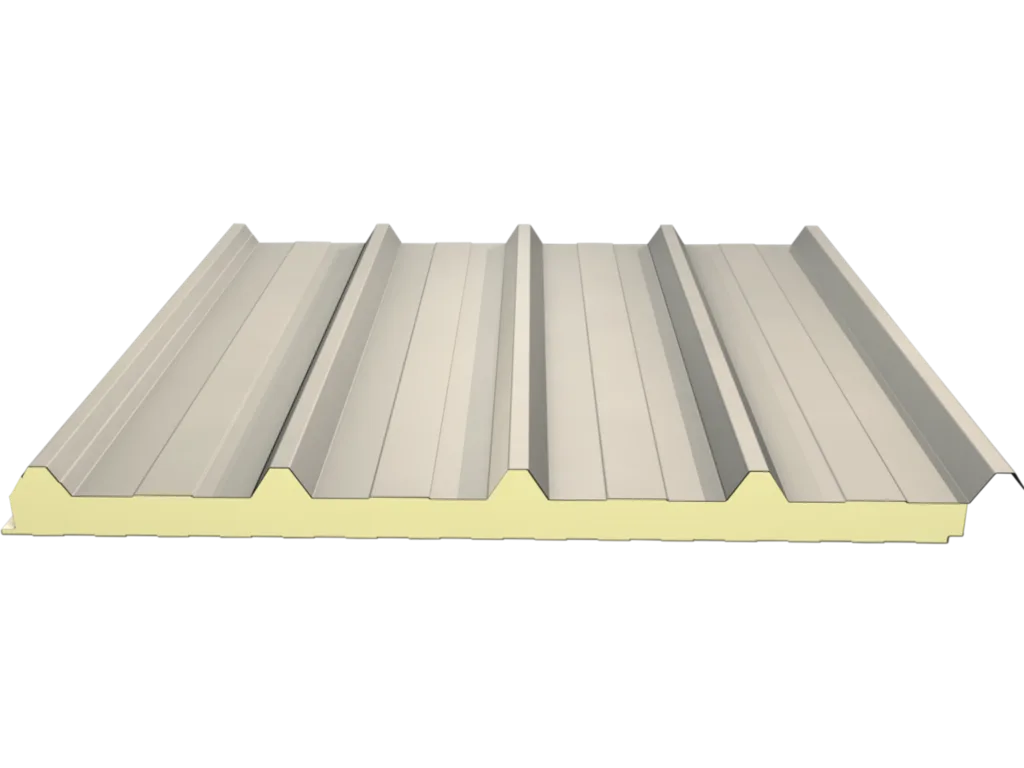
SuperEko (NRP3EE-SE): The thinnest-section product in the series, offering a 7-rib profile.
Thickness, dimensions and profile
The cover width is set at 1000 mm. In the EXO series, panel length is produced in a single piece up to 12 metres. This figure is shorter than the 15.5 metre upper limit of the standard roof and wall panels and forms one of the main differences that define the series.
| Product group | Profile | Thickness |
|---|---|---|
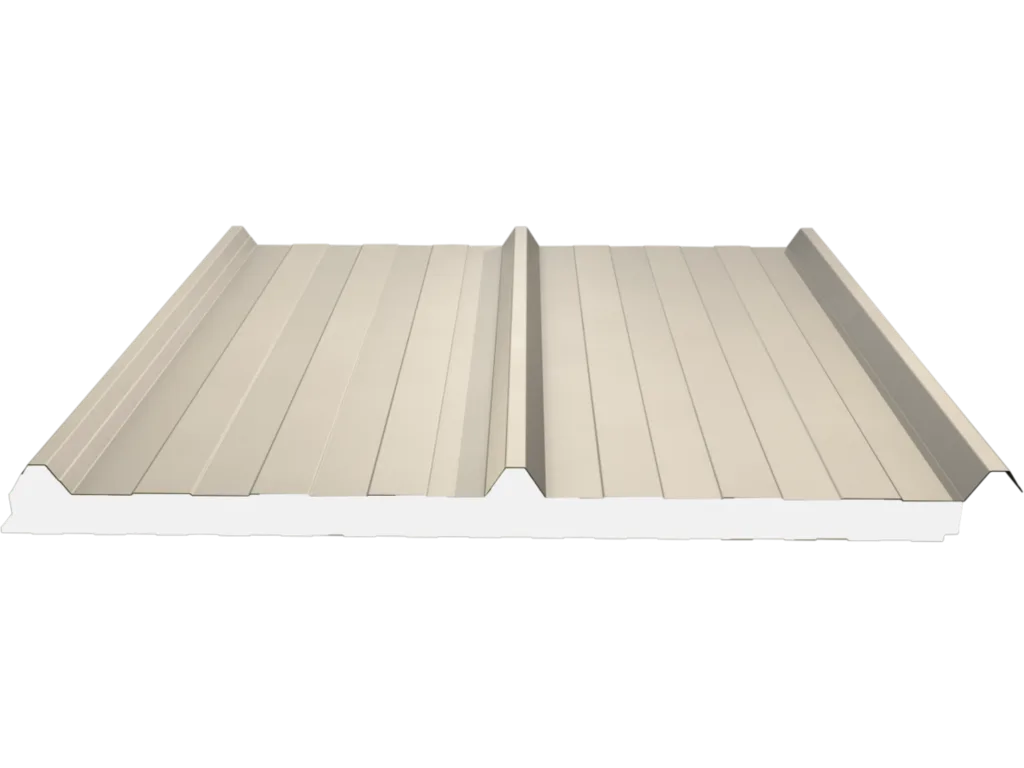
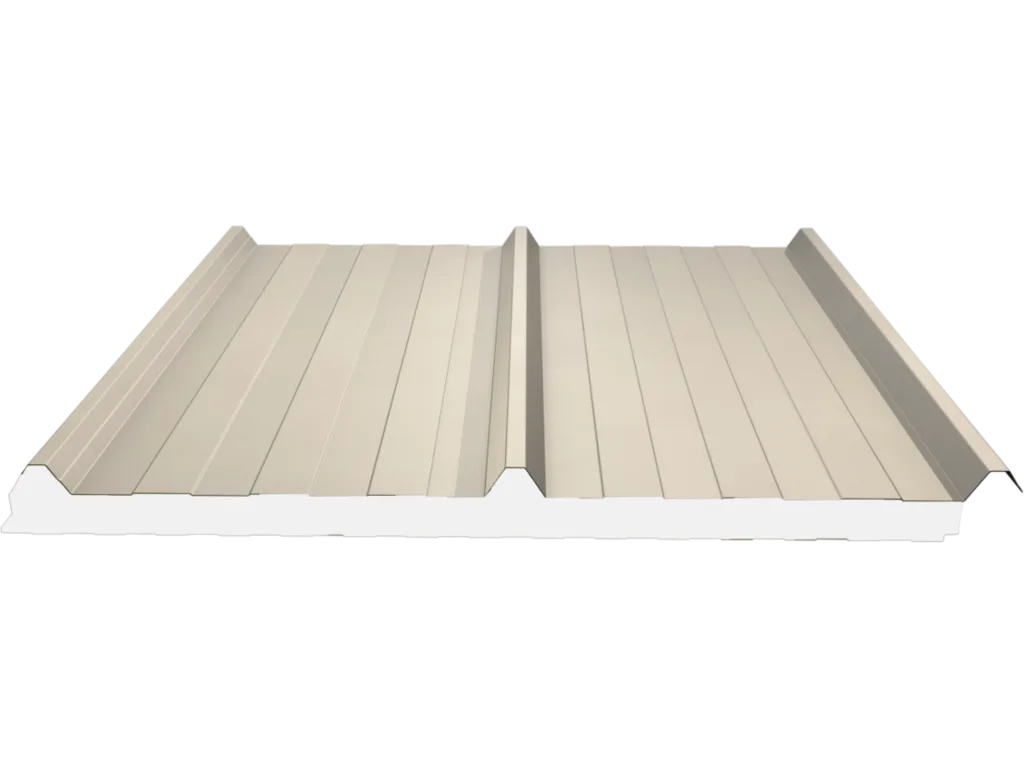
| EXO EKO and PLUS, roof | 3 and 5-rib | 30-60 mm |
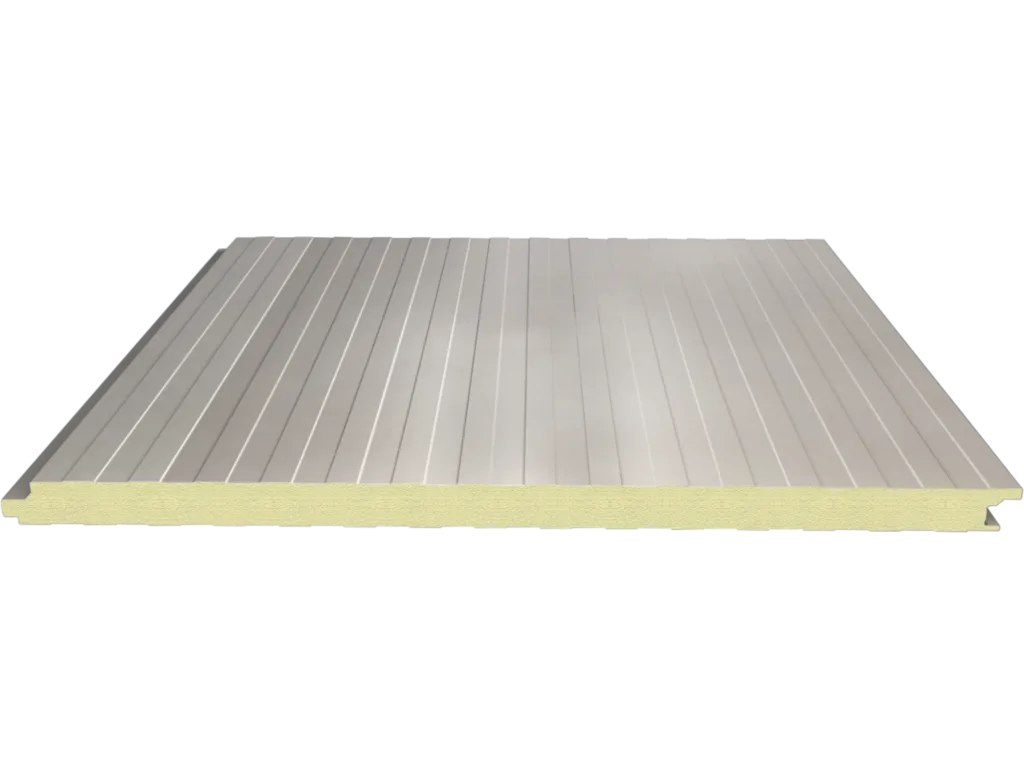
| EXO EKO, wall | Micro rib | 40-70 mm |
| EXO PLUS, wall | Micro rib | 30-60 mm |
| EXO EPS, roof and wall | 3 and 5-rib, micro rib | 30-60 mm |
| SuperEko | 7-rib | 10-30 mm |
The surface coating applied is polyester; a PE option is also offered on the SuperEko model.
Two products listed on this page fall outside these limits: GRP Panel - EPS (NRP5-CTP) and Exposed Fixing Wall - EPS (NWP-DV EPS) are produced up to a length of 15.5 metres, the thickness range of GRP Panel - EPS goes up to 30-120 mm and its outer facing is GRP. For these two products, the values on their own cards apply.
Core comparison
| Core | Thermal conductivity | Fire class |
|---|---|---|
| PUR | 0.022 W/mK | B-s2-d0 |
| EPS | 0.038 W/mK | no published class |
In practice the difference leads to this result: for the same insulation value, a panel with an EPS core requires roughly twice the thickness of one with a polyurethane core. Since the thickness range is limited to 30-60 mm, a PUR core is chosen instead of EPS in a building where insulation carries high importance.
There is no published EN 13501 fire class for EXO products with an EPS core; the fire class of these products is left blank. In projects where fire performance is decisive, panels with an EPS core are not used and the standard series with a rock wool or PUR-PIR core is used instead. Test reports can be reviewed in the Library section.
When is EXO the right choice?
The EXO series offers a suitable alternative in the following cases:
- Areas where the span is short and the purlin spacing is close
- Unheated or partly heated volumes
- Storage, garage, workshop, annexe and eave enclosure projects
- Site buildings, temporary facilities, container and prefabricated applications
- Lightly loaded parts of agricultural and livestock buildings
- Projects with firm budget limits and a moderate insulation expectation
In the following cases the standard series is considered instead of EXO:
- Facilities where heating or cooling cost carries weight in operating expenses
- Buildings where the fire regulation is decisive
- Projects with wide spans and high snow/wind loads
- Roofs requiring a single-piece panel length exceeding 12 metres
Installation and storage
Thin-section panels are more sensitive during transport and stacking. Panels are stacked on a flat and solid ground, protected from moisture, and no more than two bales are placed on top of each other. Supporting the panel at its mid-point during lifting prevents permanent deformation caused by bending.
The minimum 7% roof pitch rule for sandwich roof panels applies in full to the EXO roof profiles as well. All joint details are given in the Library section.
EXO panel prices
The EXO series has no fixed price per square metre, but the price ranking is clear. Products with an EPS core form the most economical option, the EKO series sits in the middle and the PLUS series is at the top. The main items that determine the price are:
- Core type: differences between EPS and PUR core
- Thickness: the difference between 30 mm and 60 mm is reflected in the amount of material used
- Sheet thickness and colour: special RAL colours require separate production
- Quantity and panel length
Once the intended use, span and region of the building are provided, the technical team determines whether the EXO series is sufficient for the project, and the sales team responds the same day.
Frequently asked questions
What is the difference between an EXO panel and a standard panel? The material quality is the same; the difference appears in dimensioning. The EXO series is limited to 30-60 mm thickness and a 12 metre panel length, while the standard series goes up to 200 mm thickness and 15.5 metres in length. EXO is produced for short spans and moderate insulation expectations.
Is a panel with an EPS core sufficient? If the insulation expectation is limited and the building is not heated, it is sufficient. However, the thermal conductivity of EPS is more than twice that of polyurethane (0.050 against 0.022 W/mK); within the 30-60 mm range this difference is not closed. In a heated or cooled volume, a PUR core must be chosen.
Why is the fire class of the EPS panel not stated? There is no published EN 13501 class for these products, so the field is left blank. Rather than writing an estimated value, nothing is written. In a project where fire performance is decisive, a panel with an EPS core is not taken into consideration.
What is the difference between EKO and PLUS? Both have a polyurethane core and offer the same thickness range. The PLUS series is one step above in terms of sheet and surface properties; it is preferred for applications with higher appearance and durability expectations.
Is SuperEko really produced at 10 mm? The recorded thickness range for SuperEko (NRP3EE-SE) is 10-30 mm. Which applications this thin section is suitable for is clarified by consulting the technical team; it is far below the usual thicknesses in roof applications.
Is the EXO panel used on roofs? Yes, the 3 and 5-rib EXO profiles are produced directly for roofs, and the minimum 7% pitch rule applies here as well. Span and snow load calculations are made in the same way as for the standard series; the thin section requires closer purlin spacing.
Why is the panel length limited to 12 metres? Thin-section panels flex more during transport and lifting. The 12 metre limit ensures that the panel reaches the site undamaged and does not take on permanent deformation during installation. Where longer lengths are required, the standard series is used.