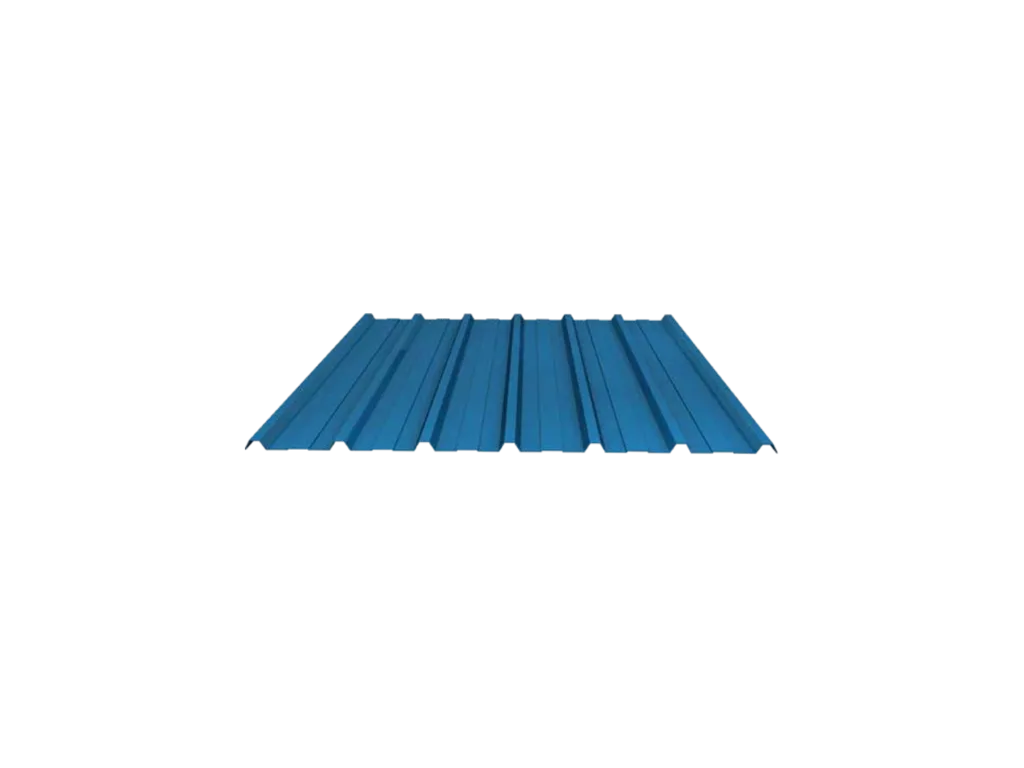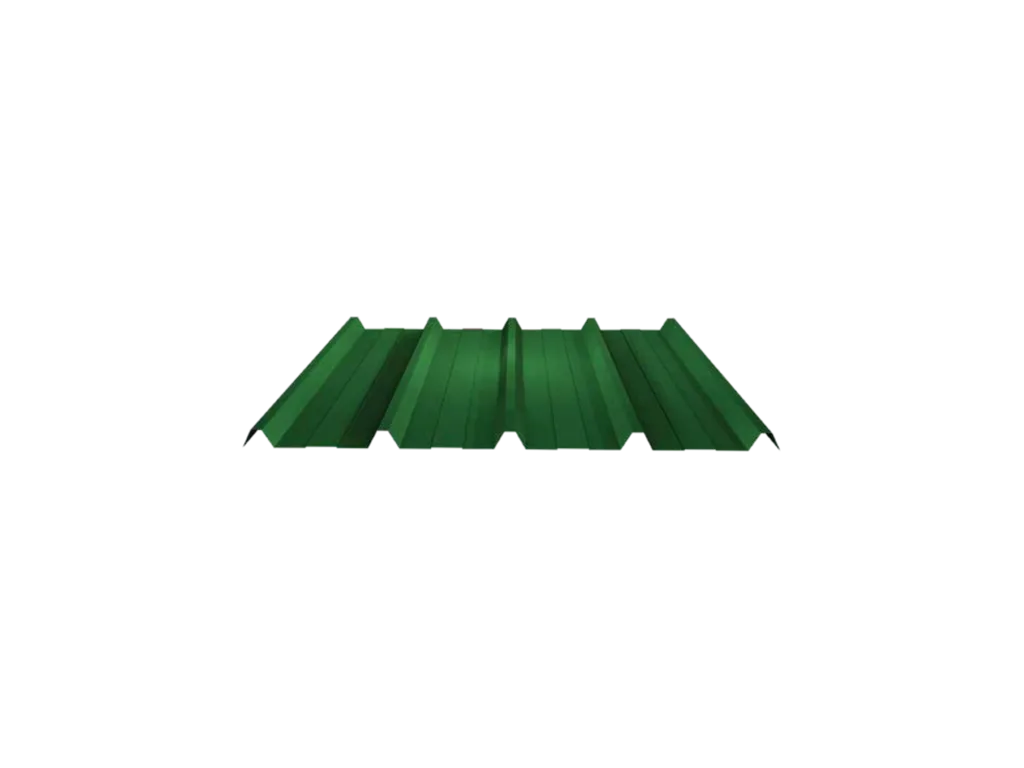
What is trapezoidal sheet?
Trapezoidal sheet is a flat steel sheet formed with trapezium-section folds called ribs. The fold increases the sheet's resistance to bending in its own plane, so a thin sheet can span distances it could not carry when flat.
The difference from a sandwich panel is the absence of a core. In a panel, insulation material sits between two steel sheets and the panel both carries load and insulates. Trapezoidal sheet is a single layer and provides no insulation. It is used on its own in buildings where insulation is not required, or with a separate insulation layer laid beneath it where it is.
Profiles
Nuhpanel produces two trapezoidal profiles. The difference between them is the rib height, and this is the value that determines the span that can be carried.
| Profile | Cover width | Rib height | Number of ribs | Sheet thickness |
|---|---|---|---|---|
| 24/1000 | 1000 mm | 24 mm | 7 | 0.50-1.00 mm |
| 37/1000 | 1000 mm | 37 mm | 5 | 0.50-1.00 mm |
Both are produced with polyester or PVDF coating in the standard colour RAL 9002. Other RAL colours are supplied to special order.
24/1000 offers a closer section with its seven ribs and is used on roofs where purlin spacing is kept narrow, in wall cladding and in soffit applications. 37/1000, with its higher rib, carries a wider span at the same sheet thickness.
Span and load
The distributed load that can be carried is a value determined by sheet thickness and span together, and is given in separate tables for the two profiles. The tables are arranged to the L/200 limit value, that is, deflection is limited so that it does not exceed one two-hundredth of the span.
When making a selection, snow load, wind and any maintenance load are assessed together. The tables are in the Library section.