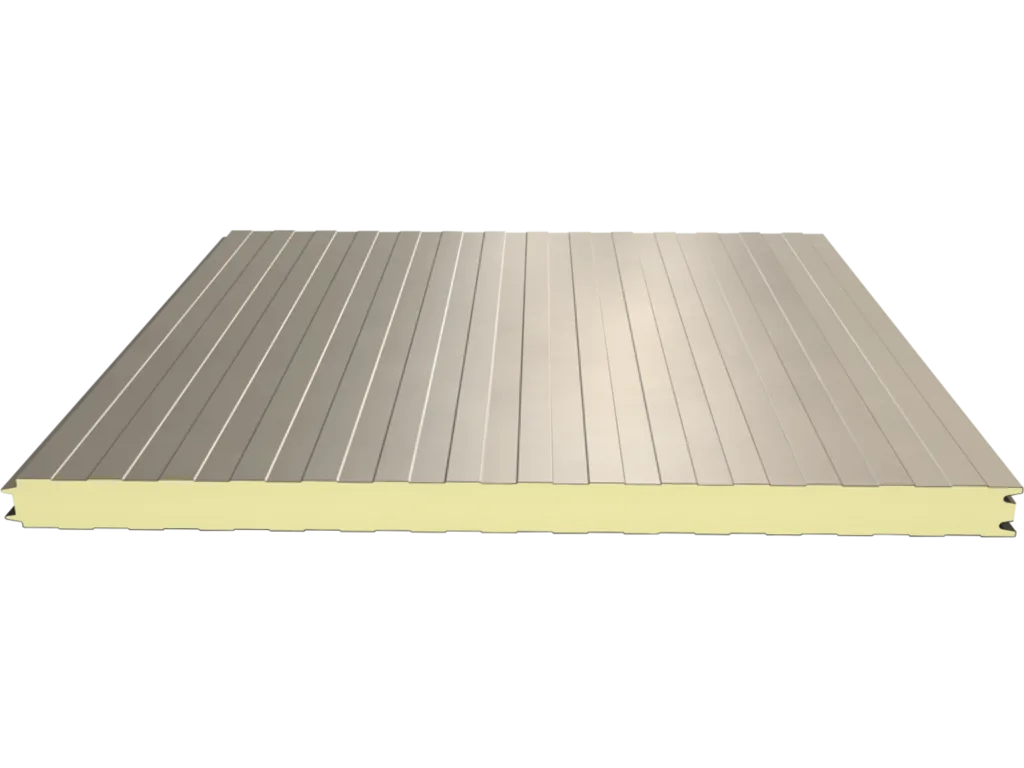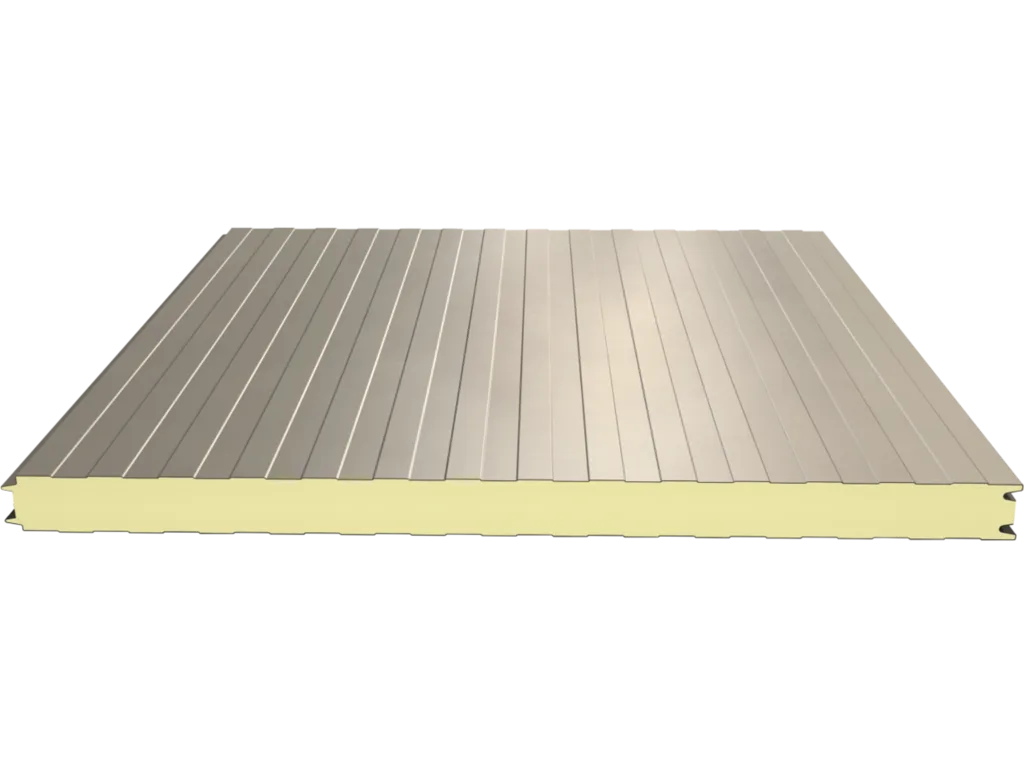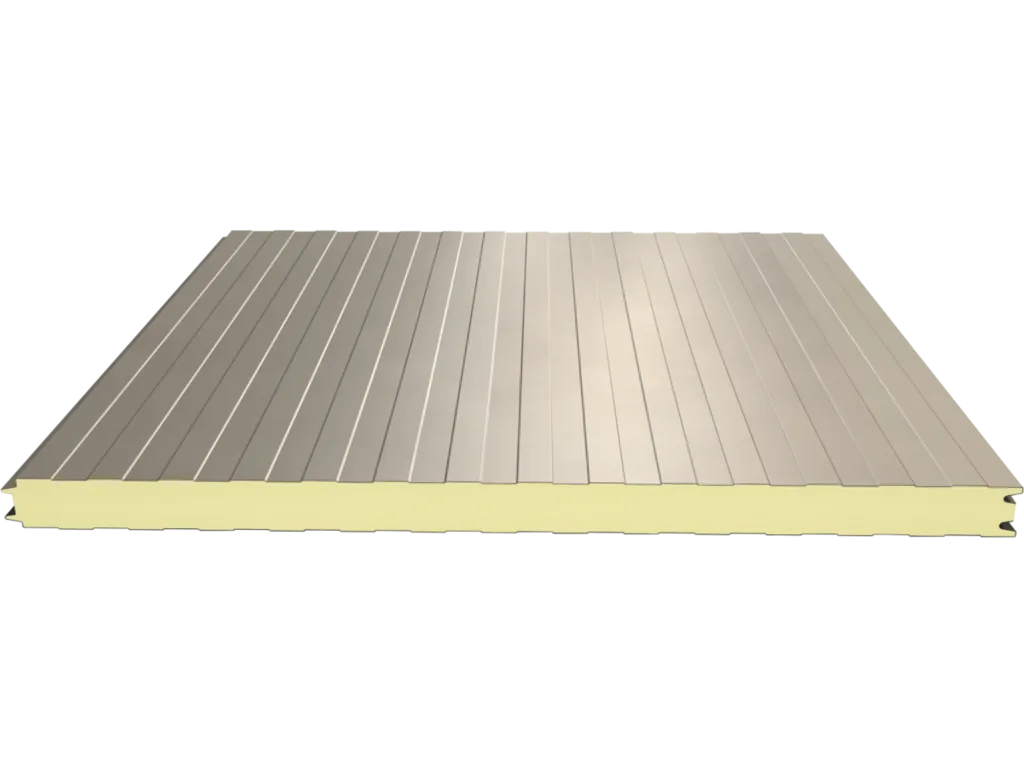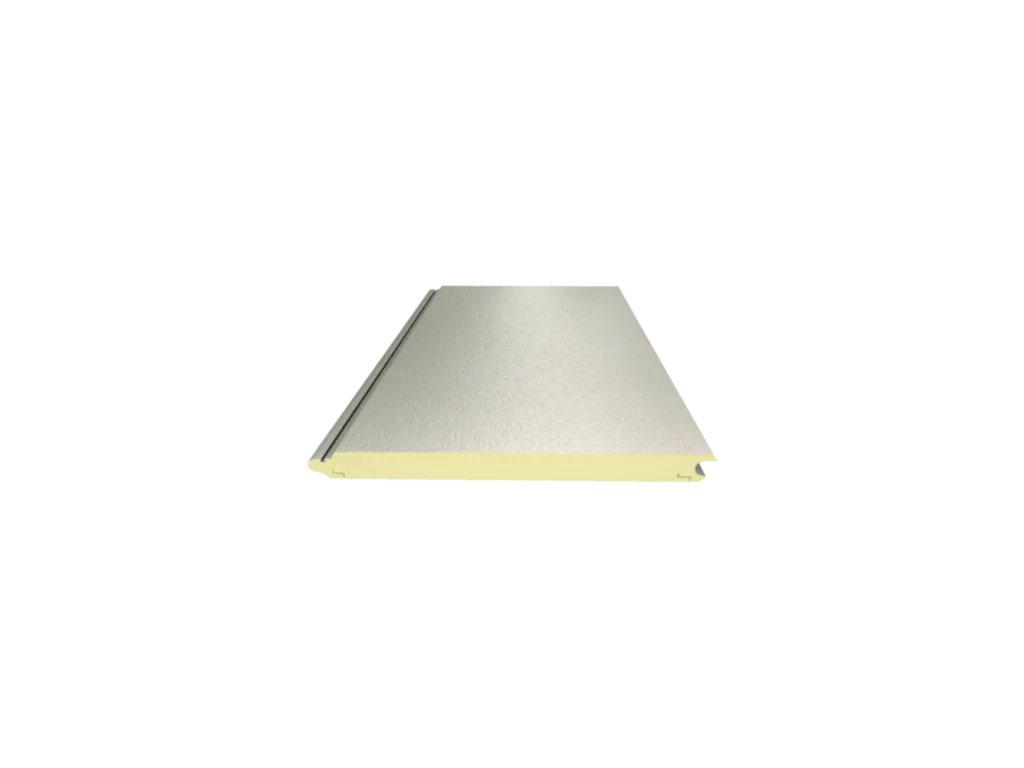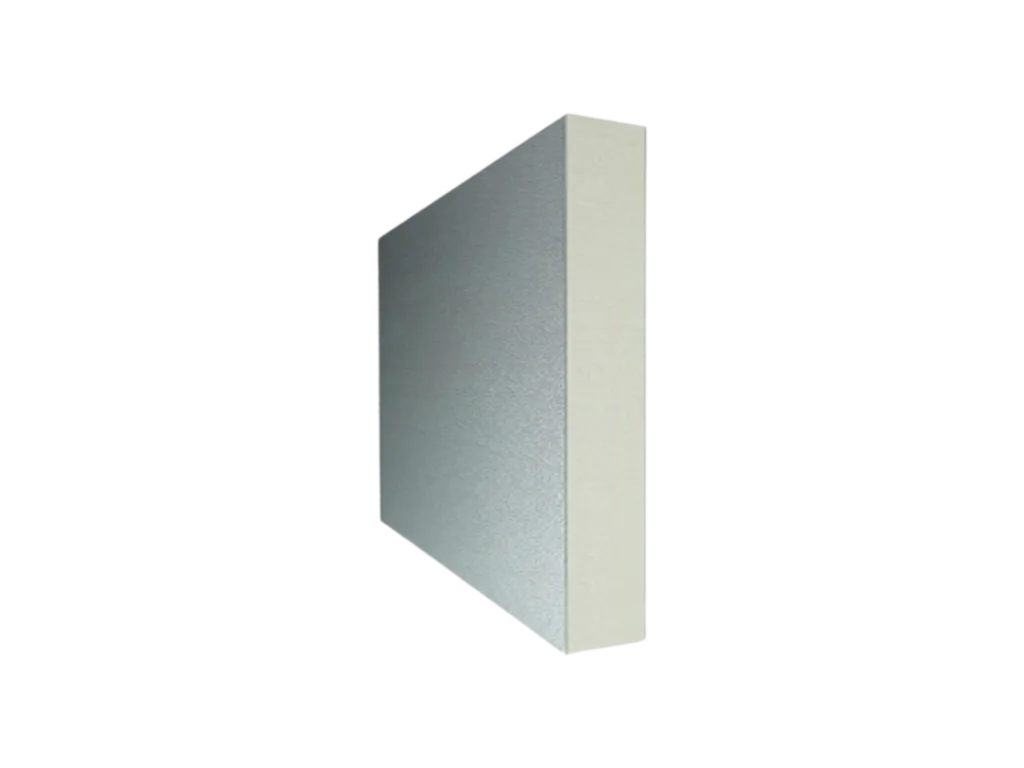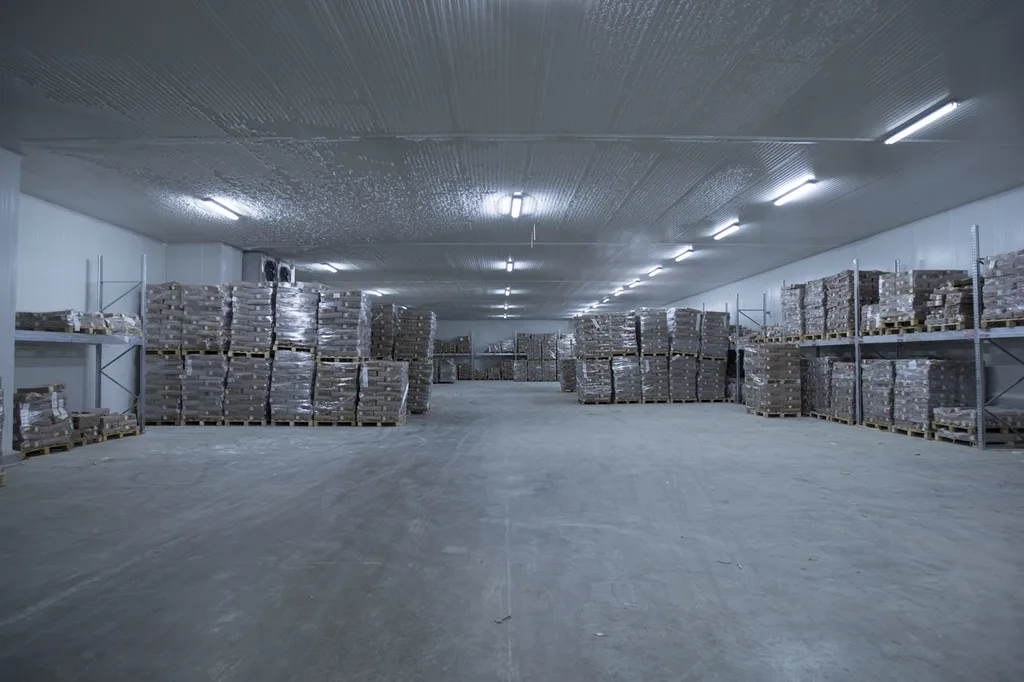
In a cold room the panel is not an ordinary building envelope; it is a running cost. Every weak point in the insulation means the refrigeration compressor works longer every day. Panels that prevent continuous energy loss are used.
Insulation thickness and temperature
Thickness follows from the target internal temperature. Thin sections are enough in standard holding rooms, while in blast chilling and frozen storage the thickness goes up to 200 mm. These are common applications. The exact section is set by the room volume, the door traffic and the refrigeration capacity.
| Use | Internal temperature | Common thickness |
|---|---|---|
| Fruit and vegetable holding | 0 °C to +4 °C | 60 mm to 80 mm |
| Frozen storage | -18 °C to -25 °C | 100 mm to 150 mm |
| Blast chiller | -35 °C and below | 150 mm to 200 mm |
The low thermal conductivity of the polyurethane core, 0.022 W/mK, delivers the same insulation performance in a much thinner section. That insulating power means less energy is spent cooling the room, and the net usable volume inside increases without the external dimensions changing.
Facing and panel width
Pre-painted galvanised steel facings give adequate protection in most standard storage applications. Where washing is frequent and humidity constant, a PVC laminated facing is chosen. Where there is direct food contact, an anti-bacterial coated panel is used.
Panel width is set between 1000 mm and 1200 mm. Using wider panels in the same storage room reduces the number of joints in the wall surface. Fewer joints largely eliminates the thermal bridging that adds to the compressor load.
Thermal bridges and details
In cold room construction, the point where insulation performance drops is not the middle of the panel face. Unexpected heat loss occurs at base joints, building corners, door frame edges and the line where the ceiling meets the wall.
The insulation core is pressed to the same density along the whole length of the panel on the production line. Because the core is uniform, no weak point that conducts heat forms in the panel body itself. The rest of the insulation quality is a matter of the correct joint accessories and installation details on site.
Product selection and scope
The scope on these projects is limited to the supply of cold room panels. The refrigeration unit, door hardware, internal racking and services fall entirely outside it. Those components are installed by the main contractor or the refrigeration company.
On the panel side, the technical team reviews each project to decide the most suitable facing and insulation thickness. The technical values and options that match the building's requirements are set out in detail on the cold room panels page.