Membrane roof panels have a known problem: the membrane and the steel are two separate layers and they separate over time. The steel, expanding with temperature, works against the membrane above it; the layer beneath the worn membrane is exposed and water enters at that point.
TRIPAN differs here: the membrane is not a layer stuck on afterwards.
Production: a lamination line at 220 degrees
The steel for a TRIPAN panel is prepared outside the standard line, on a separate lamination line. Galvanised steel and PVC membrane are bonded irreversibly at 220 degrees Celsius and become a single layer.
The panel itself is a five-rib roof profile with a rib height of 37 mm, produced in one piece up to 15.5 metres. The insulation thickness is chosen between 40 and 200 mm; the core can be PUR-PIR, rock wool or hybrid.
Thermal expansion
Steel changes dimension with temperature. A membrane held as a separate layer does not follow that movement at the same rate and separates over time. In a laminated build-up the membrane follows the movement of the steel with it.
No membrane tearing has been observed in this section under thermal cycling tests.
Mechanical impact and walking on the roof
The laminated steel layer protects the surface against impacts such as hail and falling objects. The same property makes the roof easier to walk on, reducing the need for a separate walkway.
On roofs that need maintenance this is a direct operational benefit: on a roof climbed a few times a year, the walking surface stops being a separate item of investment.
Chemical and organic effects
Acidic and organic deposits such as bird droppings, leaf litter and resin are where wear begins on conventional membrane roofs. The laminated layer protects the surface against these effects; even where the surface is damaged, water is prevented from reaching the layers beneath.
Gutters and solar integration
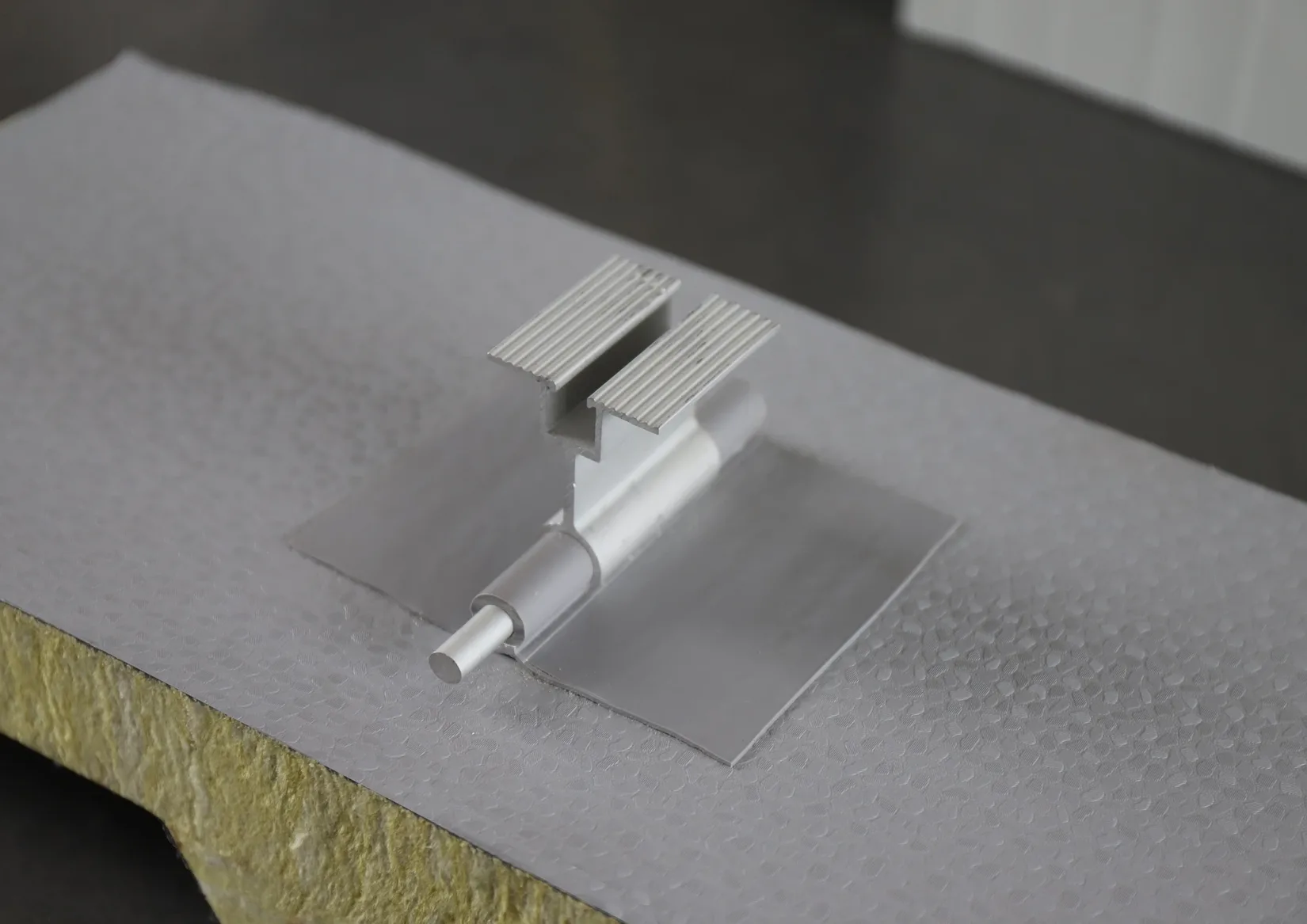
With TRIPAN there is no need for a separate gutter on the roof. There are purpose-made fixings for solar systems; on roofs carrying a plant, the mounting is made through those fixings.
The detail for buildings with a plant on the roof is on the solar roof panel page.
Core balance and fire class
On some panels with a mixed core, an imbalance between the polyurethane and the rock wool can lead to behaviour below the declared fire class. In TRIPAN the core is of a single type and the class is given for that core: B-s1-d0 with a PIR core, B-s2-d0 with a PUR core, and A2-s1-d0 with a rock wool or hybrid core.
The classification reports are in the Library section.
Where is it used?
Low-pitch roofs, industrial roofs with maintenance traffic, buildings with a solar plant planned on the roof, and regions with heavy chemical or organic fouling. The product pages are in the roof panels section; the minimum pitch rule for a sandwich roof panel applies here too, and it is 7%.